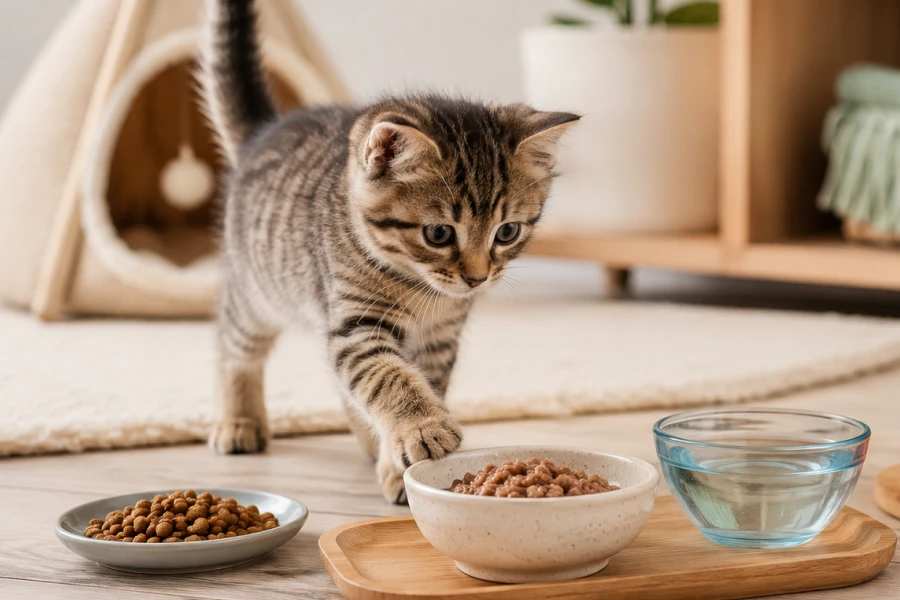
A kitten feeding plan gives new cat owners a steady framework for meals, portions, transitions, and daily observation. Kittens grow fast, and their feeding needs can shift more quickly than many owners expect. Without a plan, it is easy to overfeed, underfeed, change foods too suddenly, or misread normal appetite patterns. A simple structure helps you serve meals with confidence while watching your kitten’s response. You learn what to feed, when to feed, and how to adjust gently. That turns early cat care into a more peaceful and informed experience.
New kitten care often feels emotional because every choice seems important. Feeding becomes less stressful when you have a clear routine. A plan helps you decide meal timing, portion sizes, and transition steps before problems appear. That prevents rushed decisions during busy days.
A practical healthy feeding plan also supports communication with your veterinarian. You can explain what your kitten eats and how often. Clear details lead to better advice.
Kittens often need several meals per day because their bodies burn energy quickly. Small, regular meals can support digestion and help maintain steady energy. The exact schedule may depend on age, food type, appetite, and household routine.
Consistency matters more than perfection. If your schedule changes, keep the general rhythm familiar. Feeding at predictable times can help your kitten feel safe, especially during the first weeks in a new home.
Portions should begin with the food label, then adjust based on your kitten’s growth and body condition. Labels provide useful starting points, but they cannot fully understand your kitten. Activity level, size, and appetite all affect daily needs.
A balanced kitten diet resource can help you understand portion decisions more clearly. Measuring meals reduces guesswork. It also helps you notice when your kitten needs a change.
Your kitten’s body gives useful feedback. Healthy stools, steady appetite, bright energy, and comfortable behavior after meals are encouraging signs. Repeated vomiting, diarrhea, refusal to eat, or sudden appetite changes deserve attention and may require veterinary support.
Observation should feel practical, not obsessive. Keep simple notes during food changes. A few written details can reveal patterns that memory misses, especially when multiple family members help with feeding.
Food changes should happen gradually unless a veterinarian instructs otherwise. Mix small amounts of the new food with the old food, then increase slowly. This method lets your kitten’s digestive system adapt. It also gives you time to watch for concerns.
A feeding confidence system keeps the process organized. You know when to adjust, pause, or ask for help. That calm structure protects your kitten and reduces stress.
The best routine is one you can repeat consistently. Store food properly, measure portions, keep fresh water available, and avoid frequent unnecessary changes. Simple habits create stability for your kitten and make care easier for you.
Feeding is not only about choosing a bag or can. It is about creating a daily rhythm that supports health. With patience and structure, your kitten can grow with comfort, energy, and a strong foundation.



Leave a comment